
Český ráj background
Český ráj (which is translated as ‘the Bohemian Paradise’ and pronounced approximately as ”chess-key rye”) is an area of outstanding natural beauty, situated approximately 80 km northeast of Prague, in the Czech Republic. It is one of 26 protected areas in the country and was the first region to achieve this status, in 1955. It is one of the smaller protected areas, covering just over 180 km2. Český ráj is a broadly triangular shaped area, with the historical towns of Mnichovo Hradiště, Jičín and Železný Brod at the three corners, and the town of Turnov close to the centre.

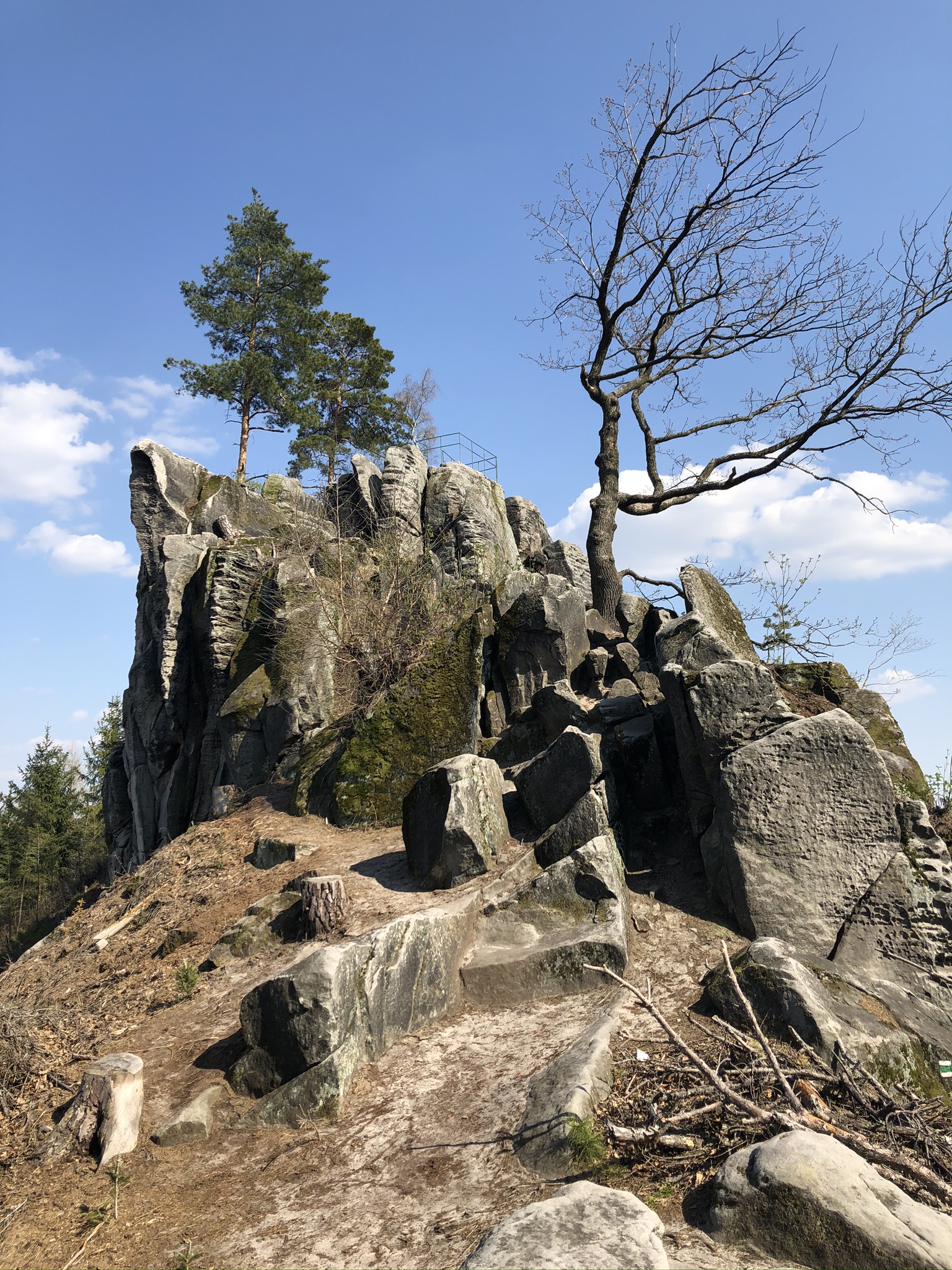
The area is most famous for its sandstone rock formations – the so called ‘rock cities’. These were formed from a large sandstone plateau which was created during the Cretaceous geological period, some 70 to 100 million years ago, when much of Bohemia was covered by a shallow tropical sea. The plateau was subsequently impacted by tectonic events, volcanic eruptions, and the erosive forces of rivers, streams and general weathering. The plateau was broken into separate rock areas, and each has developed and eroded in different ways over several million years.

Český ráj was first settled by humans some 10000 years ago. Hunter gatherers came to the slopes of the volcanic hill of Kozákov to collect rocks for processing into tools and weapons. Subsequent waves of Neolithic, Bronze Age, Celtic and Slavic settlers created villages along the Jizera river, and built forts in the sandstone rocks. In the Middle Ages, the towns of Mnichovo Hradiště, Jičín and Turnov were founded, and their founders built castles in the rocks above, to protect their newly established domains. Forests in the river valleys were cleared, but the primeval pine and oak woods amongst the rock cities lived on.
Over the subsequent centuries, the towns, villages and castles of Český ráj bore witness to the numerous events that impacted the wider world. The Hussites, the Thirty Years War and even the armies of Napoleon and the Austrian Hungarian Empire left their mark on the region. But the rocks remained serenely unaffected, standing proud and tall.
Today, visitors can enjoy this extraordinary and colourful landscape by taking one of the many trails through the sandstone rocks and primeval forests, past ruined castles and Renaissance chateau, and along the meandering river valleys. There are more than a thousand km of carefully marked paths in Český ráj. Hopefully, this guide will help a few more visitors explore those magical trails.
Here are some of my favourite places on those trails…




To start discovering your own favourite places in Český ráj, click here